Map of life expectancy at birth from Global Education Project.

Wednesday, May 18, 2022

Wednesday Bible Study: A shaggy dog tail

Chapter 19 has Elijah go through an elaborate ordeal and pointless experiences in order to receive a communication from God, all of which begins with a communication from God that could just has easily have been the final information, so we could have skipped the whole thing. 


To summarize: Ahab tells Jezebel that Elijah massacred the priests of Baal, so Jezebel sends a message to Elijah that she's going to have him killed the next day. Elijah goes and sits under a tree and asks God to kill him now. He falls asleep, then an angel wakes him up and gives him a cake and some water. Then the angel gives him more food, tells him to eat it, and tells him to go to Mount Horeb, where he stays the usual forty days and forty nights without eating or drinking. Then he has a conversation with God in which he informs God, who apparently didn't know, that the Israelites have destroyed his altars and killed his priests, and now they want to kill Elijah. God tells him to go stand on the mountain. A strong wind broke the rocks apart, but that wasn't God. Then there was an earthquake, then a fire, but they weren't God either. Then there was a "still, small voice" and that was God. 

The voice asked him what he was doing there, even though he had already told God which is how this whole thing began, so he repeats the information, word for word. (God is apparently very forgetful.) So God tells him to anoint Haz′ael king of Syria; 16 and Jehu king of Israel. How Elijah has the power to do this is not explained. Then he's to appoint  Eli′sha to be prophet in his place. Haz'ael and Jehu will murder  all of the Israelites except for 7,000 who were faithful to Yahweh. Elijah goes and finds Elisha and recruits him to be the prophet. That's it. 

However, there is a major continuity problem. Other than  appointing Elishah, none of this stuff ever happens. Haz'ael does not become king of Syria, Jehu does not become king of Israel, and they don't kill all but 7,000 Israelites -- in fact as far as we know they don't even exist. You'll see in the next chapter.


19 Ahab told Jez′ebel all that Eli′jah had done, and how he had slain all the prophets with the sword. 2 Then Jez′ebel sent a messenger to Eli′jah, saying, “So may the gods do to me and more also, if I do not make your life as the life of one of them by this time tomorrow.” 3 Then he was afraid, and he arose and went for his life, and came to Beer-sheba, which belongs to Judah, and left his servant there.

4 But he himself went a day’s journey into the wilderness, and came and sat down under a broom tree; and he asked that he might die, saying, “It is enough; now, O Lord, take away my life; for I am no better than my fathers.” 5 And he lay down and slept under a broom tree; and behold, an angel touched him, and said to him, “Arise and eat.” 6 And he looked, and behold, there was at his head a cake baked on hot stones and a jar of water. And he ate and drank, and lay down again. 7 And the angel of the Lord came again a second time, and touched him, and said, “Arise and eat, else the journey will be too great for you.” 8 And he arose, and ate and drank, and went in the strength of that food forty days and forty nights to Horeb the mount of God.

Elijah Meets God at Horeb

9 And there he came to a cave, and lodged there; and behold, the word of the Lord came to him, and he said to him, “What are you doing here, Eli′jah?” 10 He said, “I have been very jealous for the Lord, the God of hosts; for the people of Israel have forsaken thy covenant, thrown down thy altars, and slain thy prophets with the sword; and I, even I only, am left; and they seek my life, to take it away.” 11 And he said, “Go forth, and stand upon the mount before the Lord.” And behold, the Lord passed by, and a great and strong wind rent the mountains, and broke in pieces the rocks before the Lord, but the Lord was not in the wind; and after the wind an earthquake, but the Lord was not in the earthquake; 12 and after the earthquake a fire, but the Lord was not in the fire; and after the fire a still small voice. 13 And when Eli′jah heard it, he wrapped his face in his mantle and went out and stood at the entrance of the cave. And behold, there came a voice to him, and said, “What are you doing here, Eli′jah?” 14 He said, “I have been very jealous for the Lord, the God of hosts; for the people of Israel have forsaken thy covenant, thrown down thy altars, and slain thy prophets with the sword; and I, even I only, am left; and they seek my life, to take it away.” 15 And the Lord said to him, “Go, return on your way to the wilderness of Damascus; and when you arrive, you shall anoint Haz′ael to be king over Syria; 16 and Jehu the son of Nimshi you shall anoint to be king over Israel; and Eli′sha the son of Shaphat of A′bel-meho′lah you shall anoint to be prophet in your place. 17 And him who escapes from the sword of Haz′ael shall Jehu slay; and him who escapes from the sword of Jehu shall Eli′sha slay. 18 Yet I will leave seven thousand in Israel, all the knees that have not bowed to Ba′al, and every mouth that has not kissed him.”

Elisha Becomes Elijah’s Disciple

19 So he departed from there, and found Eli′sha the son of Shaphat, who was plowing, with twelve yoke of oxen before him, and he was with the twelfth. Eli′jah passed by him and cast his mantle upon him. 20 And he left the oxen, and ran after Eli′jah, and said, “Let me kiss my father and my mother, and then I will follow you.” And he said to him, “Go back again; for what have I done to you?” 21 And he returned from following him, and took the yoke of oxen, and slew them, and boiled their flesh with the yokes of the oxen, and gave it to the people, and they ate. Then he arose and went after Eli′jah, and ministered to him.

Monday, May 16, 2022

Replacement

 Here's a good discussion by Talia Levin of the belief system that motivated Payton Gendron to murder ten people in a Buffalo supermarket. This is, of course, also the mainstream ideology of the Republican party, and the explanation for its allegiance to an idiotic lunatic. I suppose it's technically correct that replacement theory is in fact a "theory" in that it presents a causal explanation, but it depends on a ridiculous moral assumption for that even to matter.


It is true that the percentage of the U.S. population which is of predominant European ancestry (coded as "white") and Christian is declining. It is not true that this is the result of a Jewish conspiracy, but regardless, it doesn't matter anyway. Why should I care that a larger share of the people around me have ancestors from other parts of the globe? I haven't been "replaced," I'm still here, and so is Tucker Carlson. I just have the opportunity to meet people with more diverse backgrounds and experiences. As far as my voting interests, they are unrelated to my pigmentation. I'm perfectly happy to vote along with Black and Brown people for candidates who we mutually support.


If Republicans don't want growing numbers of people who don't identify as white Christians to vote against them, then stop calling their presence here illegitimate and promising to deny them their fair share of wealth and power. Then you won't have a problem.

Sunday, May 15, 2022

Sunday Sermonette: A very sore winner

Chapter 18 is very long, but it tells a simple story. After long and pointless maneuvering, Elijah meets Ahab, he challenges the priests of Baal to a miracle contest, Elijah wins, then he murders all of the priests of Baal. Then God makes it rain. That's it. Enjoy!


18 After many days the word of the Lord came to Eli′jah, in the third year, saying, “Go, show yourself to Ahab; and I will send rain upon the earth.” 2 So Eli′jah went to show himself to Ahab. Now the famine was severe in Samar′ia. 3 And Ahab called Obadi′ah, who was over the household. (Now Obadi′ah revered the Lord greatly; 4 and when Jez′ebel cut off the prophets of the Lord, Obadi′ah took a hundred prophets and hid them by fifties in a cave, and fed them with bread and water.) 5 And Ahab said to Obadi′ah, “Go through the land to all the springs of water and to all the valleys; perhaps we may find grass and save the horses and mules alive, and not lose some of the animals.” 6 So they divided the land between them to pass through it; Ahab went in one direction by himself, and Obadi′ah went in another direction by himself.

7 And as Obadi′ah was on the way, behold, Eli′jah met him; and Obadi′ah recognized him, and fell on his face, and said, “Is it you, my lord Eli′jah?” 8 And he answered him, “It is I. Go, tell your lord, ‘Behold, Eli′jah is here.’” 9 And he said, “Wherein have I sinned, that you would give your servant into the hand of Ahab, to kill me? 10 As the Lord your God lives, there is no nation or kingdom whither my lord has not sent to seek you; and when they would say, ‘He is not here,’ he would take an oath of the kingdom or nation, that they had not found you. 11 And now you say, ‘Go, tell your lord, “Behold, Eli′jah is here.”’ 12 And as soon as I have gone from you, the Spirit of the Lord will carry you whither I know not; and so, when I come and tell Ahab and he cannot find you, he will kill me, although I your servant have revered the Lord from my youth. 13 Has it not been told my lord what I did when Jez′ebel killed the prophets of the Lord, how I hid a hundred men of the Lord’s prophets by fifties in a cave, and fed them with bread and water? 14 And now you say, ‘Go, tell your lord, “Behold, Eli′jah is here”’; and he will kill me.” 15 And Eli′jah said, “As the Lord of hosts lives, before whom I stand, I will surely show myself to him today.” 16 So Obadi′ah went to meet Ahab, and told him; and Ahab went to meet Eli′jah.

17 When Ahab saw Eli′jah, Ahab said to him, “Is it you, you troubler of Israel?” 18 And he answered, “I have not troubled Israel; but you have, and your father’s house, because you have forsaken the commandments of the Lord and followed the Ba′als. 19 Now therefore send and gather all Israel to me at Mount Carmel, and the four hundred and fifty prophets of Ba′al and the four hundred prophets of Ashe′rah, who eat at Jez′ebel’s table.”

Elijah’s Triumph over the Priests of Baal

20 So Ahab sent to all the people of Israel, and gathered the prophets together at Mount Carmel. 21 And Eli′jah came near to all the people, and said, “How long will you go limping with two different opinions? If the Lord is God, follow him; but if Ba′al, then follow him.” And the people did not answer him a word. 22 Then Eli′jah said to the people, “I, even I only, am left a prophet of the Lord; but Ba′al’s prophets are four hundred and fifty men. 23 Let two bulls be given to us; and let them choose one bull for themselves, and cut it in pieces and lay it on the wood, but put no fire to it; and I will prepare the other bull and lay it on the wood, and put no fire to it. 24 And you call on the name of your god and I will call on the name of the Lord; and the God who answers by fire, he is God.” And all the people answered, “It is well spoken.” 25 Then Eli′jah said to the prophets of Ba′al, “Choose for yourselves one bull and prepare it first, for you are many; and call on the name of your god, but put no fire to it.” 26 And they took the bull which was given them, and they prepared it, and called on the name of Ba′al from morning until noon, saying, “O Ba′al, answer us!” But there was no voice, and no one answered. And they limped about the altar which they had made. 27 And at noon Eli′jah mocked them, saying, “Cry aloud, for he is a god; either he is musing, or he has gone aside, or he is on a journey, or perhaps he is asleep and must be awakened.” 28 And they cried aloud, and cut themselves after their custom with swords and lances, until the blood gushed out upon them. 29 And as midday passed, they raved on until the time of the offering of the oblation, but there was no voice; no one answered, no one heeded.

30 Then Eli′jah said to all the people, “Come near to me”; and all the people came near to him. And he repaired the altar of the Lord that had been thrown down; 31 Eli′jah took twelve stones, according to the number of the tribes of the sons of Jacob, to whom the word of the Lord came, saying, “Israel shall be your name”; 32 and with the stones he built an altar in the name of the Lord. And he made a trench about the altar, as great as would contain two measures of seed. 33 And he put the wood in order, and cut the bull in pieces and laid it on the wood. And he said, “Fill four jars with water, and pour it on the burnt offering, and on the wood.” 34 And he said, “Do it a second time”; and they did it a second time. And he said, “Do it a third time”; and they did it a third time. 35 And the water ran round about the altar, and filled the trench also with water.

36 And at the time of the offering of the oblation, Eli′jah the prophet came near and said, “O Lord, God of Abraham, Isaac, and Israel, let it be known this day that thou art God in Israel, and that I am thy servant, and that I have done all these things at thy word. 37 Answer me, O Lord, answer me, that this people may know that thou, O Lord, art God, and that thou hast turned their hearts back.” 38 Then the fire of the Lord fell, and consumed the burnt offering, and the wood, and the stones, and the dust, and licked up the water that was in the trench. 39 And when all the people saw it, they fell on their faces; and they said, “The Lord, he is God; the Lord, he is God.” 40 And Eli′jah said to them, “Seize the prophets of Ba′al; let not one of them escape.” And they seized them; and Eli′jah brought them down to the brook Kishon, and killed them there.

The Drought Ends

41 And Eli′jah said to Ahab, “Go up, eat and drink; for there is a sound of the rushing of rain.” 42 So Ahab went up to eat and to drink. And Eli′jah went up to the top of Carmel; and he bowed himself down upon the earth, and put his face between his knees. 43 And he said to his servant, “Go up now, look toward the sea.” And he went up and looked, and said, “There is nothing.” And he said, “Go again seven times.” 44 And at the seventh time he said, “Behold, a little cloud like a man’s hand is rising out of the sea.” And he said, “Go up, say to Ahab, ‘Prepare your chariot and go down, lest the rain stop you.’” 45 And in a little while the heavens grew black with clouds and wind, and there was a great rain. And Ahab rode and went to Jezreel. 46 And the hand of the Lord was on Eli′jah; and he girded up his loins and ran before Ahab to the entrance of Jezreel.

Saturday, May 14, 2022

Depravity

It is the official position of the Party of Life that babies in the legal custody of the United States should starve to death. Also, prominent members of the other party are pedophiles.


This is not a political party. It is a depraved death cult. 


Oh, there's also this.

Thursday, May 12, 2022

Political Science, continued

Now I'm going to say a bit about politics in the U.S. Elections -- certainly not in the U.S. -- are not machines for turning voters' policy preferences into representation that produces them. Consider a current and very clear case. Polls consistently find that close to 70% of the electorate does not want Roe v. Wade to be overturned and wants abortion to remain legal. Yes, views about the circumstances under which it should be legal vary, but there is scant support for the bills being pushed through many state legislatures that would ban abortion entirely or allow it only under very narrow conditions.  But despite what is presumably the support of 70% of voters, the senate couldn't pass a bill codifying abortion access.

This is different from many political issues in that people are aware of it, understand it, and can't help but perceive that policy will affect their lives or those of people they know, and exactly how. Most people have limited information or understanding of most policy issues, and that's a major reason why the electoral system isn't principally about turning popular will into policy. People do know that they receive, or will receive, Social Security benefits, so those are very hard to take away. But people don't understand the complexities of health insurance markets or the tax system. They can easily be tricked by rhetoric. "I'm going to cut taxes," when they really mean taxes on wealthy people, not you. Many false beliefs are prevalent. For example, people overestimate the percentage of the federal budget that goes to foreign assistance by orders of magnitude.

Of course people's votes are also influenced by factors that have nothing to do with policy at all.  There is always racism, sexism, religious or ethnic loyalty. People also respond to personality and charisma. Supposedly people voted for George Bush II because he was somebody they might want to have a beer with and Al Gore wasn't. Republicans somehow manage to effectively present themselves as part of and champions of ordinary people, whereas they portray their opponents as "elitists." Never mind that Bush graduated from Andover, Yale and Harvard, inherited a fortune, and his cowboy accent was completely phony. Somehow this works. (Viz. J.D. Vance.)

But the abortion issue doesn't have those sorts of complications, which let's us isolate on a couple of factors. The first is so-called concentrated vs. diffuse interests. For a lot of people who oppose legal abortion, probably most of them actually, it's the issue they care about the most -- quite possibly the only issue they care about. It completely determines their voting choices. For most of that large majority that favors legal abortion, however, it's just one of many issues that matter to them. As long as Roe v. Wade has been the law of the land, in fact, it hasn't seemed to matter very much to most people, who just assumed that what politicians said about it was pretty much irrelevant. 

That may change now but in the meantime the issue has benefited abortion opponents because if you can guarantee getting 30% of the people to vote for you on the basis of that issue alone, you can pick off another 20% who will vote for you for other reasons. Those 30% also tend to be activists, who donate money and volunteer for campaigns. 

We have a federal system, of course, and in some states support for legal abortion is lower and even below 50%. So it's not surprising that legislation to outlaw abortion would advance in a few states. But in the U.S., conservatives have advantages that magnify their numbers. Liberal voters tend to be concentrated in urban areas, whereas conservative voters are spread out in less densely populated regions. That means all those Democratic voters can be squeezed into a single district where Democrats win overwhelmingly, whereas conservatives may win three districts by a much narrower margin. This is a built in advantage, but it can be exacerbated by gerrymandering. 

Then of course there is the Senate and the electoral college. That Wyoming has the same number of senators as California is just ridiculous, but there it is. Because electoral votes are allocated according to representation in both the house and the senate, small rural states also get an extra advantage in presidential elections. 

Finally, there is the incorrigible problem of the corporate news media, which pay little attention to public policy issues and instead focus on personalities, electoral horse races, and stenographically and uncritically channeling political rhetoric. The exception if the Fox News propaganda network which continually spews lies and bigotry. That seems to work for a lot of people.

Wednesday, May 11, 2022

Wednesday Bible Study: Introducing The Big Kahuna

In Chapter 17, we meet Elijah, who is arguably the most important figure in the Tanakh. From the Jewish perspective, he is the harbinger of the Messiah, according to the Book of Malachi. He is therefore central to the eschatology of all the faiths that revere the Hebrew Bible, including Christianity and Islam. He is obviously also the inspiration for the Jesus of the Gospels, performing several miracles that prefigure ones attributed to Jesus. (However, Christian theology conflates him with John the Baptist, not Jesus himself.) Elijah appears at the Transfiguration in all three of the synoptic Gospels. (That is Matthew, Mark and Luke which share many elements.) In contemporary Judaism, his name is invoked weekly at the close of the Sabbath and he also has a role in the Seder and other Jewish customs. As we meet him in this chapter, he performs two miracles which prefigure miracles of Jesus. So it is really at this point that the link between Old Testament and New is established. (Jesus explicitly renounced the laws of the Torah in Matthew 22.)


So here goes.


17 Now Eli′jah the Tishbite, of Tishbe[a] in Gilead, said to Ahab, “As the Lord the God of Israel lives, before whom I stand, there shall be neither dew nor rain these years, except by my word.” 2 And the word of the Lord came to him, 3 “Depart from here and turn eastward, and hide yourself by the brook Cherith, that is east of the Jordan. 4 You shall drink from the brook, and I have commanded the ravens to feed you there.” 5 So he went and did according to the word of the Lord; he went and dwelt by the brook Cherith that is east of the Jordan. 6 And the ravens brought him bread and meat in the morning, and bread and meat in the evening; and he drank from the brook. 7 And after a while the brook dried up, because there was no rain in the land.

The Widow of Zarephath

8 Then the word of the Lord came to him, 9 “Arise, go to Zar′ephath, which belongs to Sidon, and dwell there. Behold, I have commanded a widow there to feed you.” 10 So he arose and went to Zar′ephath; and when he came to the gate of the city, behold, a widow was there gathering sticks; and he called to her and said, “Bring me a little water in a vessel, that I may drink.” 11 And as she was going to bring it, he called to her and said, “Bring me a morsel of bread in your hand.” 12 And she said, “As the Lord your God lives, I have nothing baked, only a handful of meal in a jar, and a little oil in a cruse; and now, I am gathering a couple of sticks, that I may go in and prepare it for myself and my son, that we may eat it, and die.” 13 And Eli′jah said to her, “Fear not; go and do as you have said; but first make me a little cake of it and bring it to me, and afterward make for yourself and your son. 14 For thus says the Lord the God of Israel, ‘The jar of meal shall not be spent, and the cruse of oil shall not fail, until the day that the Lord sends rain upon the earth.’” 15 And she went and did as Eli′jah said; and she, and he, and her household ate for many days. 16 The jar of meal was not spent, neither did the cruse of oil fail, according to the word of the Lord which he spoke by Eli′jah.

Elijah Revives the Widow’s Son

17 After this the son of the woman, the mistress of the house, became ill; and his illness was so severe that there was no breath left in him. 18 And she said to Eli′jah, “What have you against me, O man of God? You have come to me to bring my sin to remembrance, and to cause the death of my son!” 19 And he said to her, “Give me your son.” And he took him from her bosom, and carried him up into the upper chamber, where he lodged, and laid him upon his own bed. 20 And he cried to the Lord, “O Lord my God, hast thou brought calamity even upon the widow with whom I sojourn, by slaying her son?” 21 Then he stretched himself upon the child three times, and cried to the Lord, “O Lord my God, let this child’s soul come into him again.” 22 And the Lord hearkened to the voice of Eli′jah; and the soul of the child came into him again, and he revived. 23 And Eli′jah took the child, and brought him down from the upper chamber into the house, and delivered him to his mother; and Eli′jah said, “See, your son lives.” 24 And the woman said to Eli′jah, “Now I know that you are a man of God, and that the word of the Lord in your mouth is truth.”

Footnotes

  1. 1 Kings 17:1 Gk: Heb of the settlers

Tuesday, May 10, 2022

Political Science

First all the people who write on the op-ed page and yack on TV were experts on immigration policy. Then they suddenly became experts on infectious disease epidemiology, and now they're all experts on war strategy. It's amazing. This happens instantly, they don't even need to go back to school.

Anyhow, I'm not a real doctor, I'm a doctor of philosophy, but to gain the letters after my name I had to pass qualifying examinations in political science. Back then, however, we did not pay a lot of attention to dictatorial or totalitarian regimes, partly because at the time the Soviet Union was collapsing and China appeared to be liberalizing, so it didn't seem so urgent; and also because the program was mostly about domestic U.S. policy anyway. (Although the Heller School does now offer global studies.) 

So I have to admit I expected Uncle Vlad to be deposed  or at least sidelined after the horrific debacle of the Ukraine invasion. I didn't realize how far the totalitarian process had gone in Russia. He's been working over the years to become coup proof. When the so-called oligarchs started denouncing the invasion, people thought that would cause Putin's demise or at least make him change course, but in fact they aren't oligarchs at all. They're guys who got rich looting the assets of the Soviet Union but he has detached them from political power. Any who dissent have their assets confiscated and they end up in jail or dead. Many of them fled the country long ago.

He's similarly made himself coup-proof with the military. That's actually an important reason why the Russian military is so ineffectual. All the high ranking officers are shadowed by what were called commissars in Soviet days, party functionaries who monitor their loyalty. They aren't allowed to communicate with each other privately. Lower ranking officers can't make decisions, they can only channel orders from above, and there are no noncoms at all. 

This means organizing a coup, or even a more localized mutiny, is very difficult. (The situation is bad enough that mutinies are happening, but they haven't been very consequential yet.) This means that Russian forces can't react flexibly to conditions on the ground, and their actions are poorly coordinated. Nevertheless, despite their failures they can't adapt, and they can't rise up against the regime either. 

I have what I hope is more sophisticated insight into our own very unpleasant situation here in the U.S., which I'll get to next.

Sunday, May 08, 2022

Sunday Sermonette: My eyes glaze over

I warned you that the Book of Kings gets very tedious. Here we have yet more endless recitation of faceless rulers -- we learn nothing about them but their names -- who anger God and have their families massacred. For the details, we are repeatedly referred to other books, that have been lost. Not much to say about this, and I don't know what the point of it is supposed to be. It's interesting that Melville chose to name his obsessed captain Ahab, which is not a name anyone would ordinarily give to a child.


BTW KJV translates "He did not leave him a single male" in verse 11 as "He left not one who pisseth against the wall," which I presume is the literal translation, and is a locution used frequently. But evidently the RSV translators found it too crude.


The last paragraph is a reference to a prophecy in Joshua 6:26: "Cursed be the man before the LORD, that riseth up and buildeth this city Jericho: he shall lay the foundation thereof in his firstborn, and in his youngest son shall he set up the gates of it."


16 And the word of the Lord came to Jehu the son of Hana′ni against Ba′asha, saying, 2 “Since I exalted you out of the dust and made you leader over my people Israel, and you have walked in the way of Jerobo′am, and have made my people Israel to sin, provoking me to anger with their sins, 3 behold, I will utterly sweep away Ba′asha and his house, and I will make your house like the house of Jerobo′am the son of Nebat. 4 Any one belonging to Ba′asha who dies in the city the dogs shall eat; and any one of his who dies in the field the birds of the air shall eat.”

5 Now the rest of the acts of Ba′asha, and what he did, and his might, are they not written in the Book of the Chronicles of the Kings of Israel? 6 And Ba′asha slept with his fathers, and was buried at Tirzah; and Elah his son reigned in his stead. 7 Moreover the word of the Lord came by the prophet Jehu the son of Hana′ni against Ba′asha and his house, both because of all the evil that he did in the sight of the Lord, provoking him to anger with the work of his hands, in being like the house of Jerobo′am, and also because he destroyed it.

Elah Reigns over Israel

8 In the twenty-sixth year of Asa king of Judah, Elah the son of Ba′asha began to reign over Israel in Tirzah, and he reigned two years. 9 But his servant Zimri, commander of half his chariots, conspired against him. When he was at Tirzah, drinking himself drunk in the house of Arza, who was over the household in Tirzah, 10 Zimri came in and struck him down and killed him, in the twenty-seventh year of Asa king of Judah, and reigned in his stead.

11 When he began to reign, as soon as he had seated himself on his throne, he killed all the house of Ba′asha; he did not leave him a single male of his kinsmen or his friends. 12 Thus Zimri destroyed all the house of Ba′asha, according to the word of the Lord, which he spoke against Ba′asha by Jehu the prophet, 13 for all the sins of Ba′asha and the sins of Elah his son which they sinned, and which they made Israel to sin, provoking the Lord God of Israel to anger with their idols. 14 Now the rest of the acts of Elah, and all that he did, are they not written in the Book of the Chronicles of the Kings of Israel?

Third Dynasty: Zimri Reigns over Israel

15 In the twenty-seventh year of Asa king of Judah, Zimri reigned seven days in Tirzah. Now the troops were encamped against Gib′bethon, which belonged to the Philistines, 16 and the troops who were encamped heard it said, “Zimri has conspired, and he has killed the king”; therefore all Israel made Omri, the commander of the army, king over Israel that day in the camp. 17 So Omri went up from Gib′bethon, and all Israel with him, and they besieged Tirzah. 18 And when Zimri saw that the city was taken, he went into the citadel of the king’s house, and burned the king’s house over him with fire, and died, 19 because of his sins which he committed, doing evil in the sight of the Lord, walking in the way of Jerobo′am, and for his sin which he committed, making Israel to sin. 20 Now the rest of the acts of Zimri, and the conspiracy which he made, are they not written in the Book of the Chronicles of the Kings of Israel?

Fourth Dynasty: Omri Reigns over Israel

21 Then the people of Israel were divided into two parts; half of the people followed Tibni the son of Ginath, to make him king, and half followed Omri. 22 But the people who followed Omri overcame the people who followed Tibni the son of Ginath; so Tibni died, and Omri became king. 23 In the thirty-first year of Asa king of Judah, Omri began to reign over Israel and he reigned for twelve years; six years he reigned in Tirzah. 24 He bought the hill of Samar′ia from Shemer for two talents of silver; and he fortified the hill, and called the name of the city which he built, Samar′ia, after the name of Shemer, the owner of the hill.

25 Omri did what was evil in the sight of the Lord, and did more evil than all who were before him. 26 For he walked in all the way of Jerobo′am the son of Nebat, and in the sins which he made Israel to sin, provoking the Lord, the God of Israel, to anger by their idols. 27 Now the rest of the acts of Omri which he did, and the might that he showed, are they not written in the Book of the Chronicles of the Kings of Israel? 28 And Omri slept with his fathers, and was buried in Samar′ia; and Ahab his son reigned in his stead.

Ahab Reigns over Israel

29 In the thirty-eighth year of Asa king of Judah, Ahab the son of Omri began to reign over Israel, and Ahab the son of Omri reigned over Israel in Samar′ia twenty-two years. 30 And Ahab the son of Omri did evil in the sight of the Lord more than all that were before him. 31 And as if it had been a light thing for him to walk in the sins of Jerobo′am the son of Nebat, he took for wife Jez′ebel the daughter of Ethba′al king of the Sido′nians, and went and served Ba′al, and worshiped him. 32 He erected an altar for Ba′al in the house of Ba′al, which he built in Samar′ia. 33 And Ahab made an Ashe′rah. Ahab did more to provoke the Lord, the God of Israel, to anger than all the kings of Israel who were before him. 34 In his days Hi′el of Bethel built Jericho; he laid its foundation at the cost of Abi′ram his first-born, and set up its gates at the cost of his youngest son Segub, according to the word of the Lord, which he spoke by Joshua the son of Nun.

Saturday, May 07, 2022

The A word once again

I've written about  abortion here before, and now I'm pretty much just going to repeat myself, but it's time to do so.


Point one -- and this is important -- conservative evangelicals had absolutely no problem with abortion until the mid-1970s. Historian Randall Balmer tells the story here, and it is absolutely incontrovertible, as this excerpt makes clear:


Both before and for several years after Roe, evangelicals were overwhelmingly indifferent to the subject, which they considered a “Catholic issue.” In 1968, for instance, a symposium sponsored by the Christian Medical Society and Christianity Today, the flagship magazine of evangelicalism, refused to characterize abortion as sinful, citing “individual health, family welfare, and social responsibility” as justifications for ending a pregnancy. In 1971, delegates to the Southern Baptist Convention in St. Louis, Missouri, passed a resolution encouraging “Southern Baptists to work for legislation that will allow the possibility of abortion under such conditions as rape, incest, clear evidence of severe fetal deformity, and carefully ascertained evidence of the likelihood of damage to the emotional, mental, and physical health of the mother.” The convention, hardly a redoubt of liberal values, reaffirmed that position in 1974, one year after Roe, and again in 1976.

When the Roe decision was handed down, W. A. Criswell, the Southern Baptist Convention’s former president and pastor of First Baptist Church in Dallas, Texas—also one of the most famous fundamentalists of the 20th century—was pleased: “I have always felt that it was only after a child was born and had a life separate from its mother that it became an individual person,” he said, “and it has always, therefore, seemed to me that what is best for the mother and for the future should be allowed.”


What happened to change this? The answer is school desegregation. After Brown v Board of Education, "Christians" throughout the south opened segregated private schools. But in the early 1970s, the courts ruled that segregated schools were not entitled to tax exemption. This infuriated evangelical leaders, but conservative activist Paul Weyrich realized it would be difficult to openly organize in favor of racial discrimination. So he needed a different issue to galvanize white racist "Christians," and he convinced church leaders that abortion could play that role.

Weyrich, Falwell and leaders of the emerging religious right enlisted an unlikely ally in their quest to advance abortion as a political issue: Francis A. Schaeffer—a goateed, knickers-wearing theologian who was warning about the eclipse of Christian values and the advance of something he called “secular humanism.” Schaeffer, considered by many the intellectual godfather of the religious right, was not known for his political activism, but by the late 1970s he decided that legalized abortion would lead inevitably to infanticide and euthanasia, and he was eager to sound the alarm. Schaeffer teamed with a pediatric surgeon, C. Everett Koop, to produce a series of films entitled  Whatever Happened to the Human Race? In the early months of 1979, Schaeffer and Koop, targeting an evangelical audience, toured the country with these films, which depicted the scourge of abortion in graphic terms—most memorably with a scene of plastic baby dolls strewn along the shores of the Dead Sea. Schaeffer and Koop argued that any society that countenanced abortion was captive to “secular humanism” and therefore caught in a vortex of moral decay.

Between Weyrich’s machinations and Schaeffer’s jeremiad, evangelicals were slowly coming around on the abortion issue. At the conclusion of the film tour in March 1979, Schaeffer reported that Protestants, especially evangelicals, “have been so sluggish on this issue of human life, and  Whatever Happened to the Human Race? is causing real waves, among church people and governmental people too.”


Now that we understand that this was a  largely manufactured issue, we need to understand why the abortion rights movement and liberal politicians have been so reticent to say so, or to take on the purported moral issue directly. As I have noted here many times, abortion is nowhere condemned as sinful in the Bible, Old Testament or New. On the contrary, the only reference to abortion in the  Bible is in Numbers 5, which prescribes a ceremony for the purpose of inducing abortion in the case of an unfaithful wife. The idea that human life begins at conception, of course, could not even have been conceived (sic) until the 20th Century when the mechanism of conception was first understood as the fusion of the gametes and the creation of the zygote. 


But the claim that a zygote is a human being in any meaningful moral sense is transparently ridiculous. At least half of them do not survive. In many cases the woman does not even know she is pregnant, but just has a late period. So if you believe that human life begins at conception, you also believe that God slaughters hundreds of millions of babies every year. 

More true facts. Childbearing is far more dangerous, far more likely to cause injury or death to the mother, than is abortion. Abortion, and for that matter infanticide, were commonplace in Biblical times and right through the Middle Ages. While Catholic thinkers have had somewhat varying opinions about the matter, the Catholic Church did not definitively define abortion as sinful until the late 19th Century, in reaction to the feminist movement. It was about sex, not life. And as I have shown, conservative protestants didn't come around to that opinion until 100 years later. As for the Constitution, the 14th Amendment grants rights to "a person born in the United States," which is as clear as it can possibly be.  

The Constitution also prohibits "an establishment of religion," which means that while you are free to believe whatever you want, you can't impose your religious beliefs on me. And in this case, the religious beliefs in question are of very recent origin, more analogous to Scientology than to Christianity as it existed for 2,000 years. So let's say so.

Friday, May 06, 2022

Sheldon Krimsky

Sheldon Krimsky, who supervised my master's thesis at Tufts, has died at age 80. His NYT obituary is here, if you haven't used up your free reads. His work is highly relevant to a discussion we've been having here. 


Shelly was a member of the National Academy of Sciences, and he was a critic of science. His life's work was to expose corruption in science, and warn of the negative effects of technology. Sometimes he went a bit overboard, in my view, particularly with respect to gene editing. He was much more alarmed by it than I think was really called for, but that's okay. We need to think about worst case scenarios. And he was certainly right to be concerned about the effect of genetically modified organisms on the economics of farming, and he was right about the long-term problems with herbicides. 


I learned from him to think critically about science, that it is at the same time the right way to gain understanding of the world; and subject to error and misuse. A lot of people have a hard time seeing that both are true. So a lot of what I do here is to sort through that paradox. I haven't been in touch with Shelly for a few years, so I never really had a chance to tell him how much his mentorship shaped my thinking. In fact the last contact I had with him was to give a negative review to a book he edited. (Yeah it was about gene editing.) So that's too bad. But it's good to know that the Times has honored his life's work.

Wednesday, May 04, 2022

Wednesday Bible Study: Shit Happens

The Book of Kings gets quite tedious now, with endless recitation of largely pointless events. The back and forth between kings who are devout followers of Yahweh and kings who are not continues, with various random-seeming factoids thrown in. But this purports to be little more than an outline, with repeated references to other books, which have been lost, for the details. I will say that we are now close enough to the time this was written that it likely has some kernel of historical fact. There are some oddities in this chapter which I will point out along the way. I'm going to highlight something in verse 2, and some other items.


15 Now in the eighteenth year of King Jerobo′am the son of Nebat, Abi′jam began to reign over Judah. 2 He reigned for three years in Jerusalem. His mother’s name was Ma′acah the daughter of Abish′alom. 3 And he walked in all the sins which his father did before him; and his heart was not wholly true to the Lord his God, as the heart of David his father. 4 Nevertheless for David’s sake the Lord his God gave him a lamp in Jerusalem, setting up his son after him, and establishing Jerusalem; 5 because David did what was right in the eyes of the Lord, and did not turn aside from anything that he commanded him all the days of his life, except in the matter of Uri′ah the Hittite. 6

Well yeah, there was that but it wasn't the only thing. 

 Now there was war between Rehobo′am and Jerobo′am all the days of his life. 7 The rest of the acts of Abi′jam, and all that he did, are they not written in the Book of the Chronicles of the Kings of Judah? And there was war between Abi′jam and Jerobo′am. 8 And Abi′jam slept with his fathers; and they buried him in the city of David. And Asa his son reigned in his stead.

Asa Reigns over Judah

9 In the twentieth year of Jerobo′am king of Israel, Asa began to reign over Judah, 10 and he reigned forty-one years in Jerusalem. His mother’s name was Ma′acah the daughter of Abish′alom. 11 

Now this is weird. He had the same mother as his father. Did Abi'jam marry his own mother? That's the implication.

And Asa did what was right in the eyes of the Lord, as David his father had done. 12 He put away the male cult prostitutes out of the land, and removed all the idols that his fathers had made. 13 

Note that this is often taken to be a condemnation of homosexuality, but it's actually more specific, referring to temple prostitution. It's also actually lenient since the Torah calls for death.

He also removed Ma′acah his mother from being queen mother because she had an abominable image made for Ashe′rah; and Asa cut down her image and burned it at the brook Kidron. 14 But the high places were not taken away. Nevertheless the heart of Asa was wholly true to the Lord all his days. 15 And he brought into the house of the Lord the votive gifts of his father and his own votive gifts, silver, and gold, and vessels.

Alliance with Aram against Israel

16 And there was war between Asa and Ba′asha king of Israel all their days. 17 Ba′asha king of Israel went up against Judah, and built Ramah, that he might permit no one to go out or come in to Asa king of Judah. 18 

He didn't actually build Ramah, as it was mentioned in Samuel. Presumably he fortified it to control access to Jerusalem.

Then Asa took all the silver and the gold that were left in the treasures of the house of the Lord and the treasures of the king’s house, and gave them into the hands of his servants; and King Asa sent them to Ben-ha′dad the son of Tabrim′mon, the son of Hezi′on, king of Syria, who dwelt in Damascus, saying, 19 “Let there be a league between me and you, as between my father and your father: behold, I am sending to you a present of silver and gold; go, break your league with Ba′asha king of Israel, that he may withdraw from me.” 20 And Ben-ha′dad hearkened to King Asa, and sent the commanders of his armies against the cities of Israel, and conquered Ijon, Dan, A′bel-beth-ma′acah, and all Chin′neroth, with all the land of Naph′tali. 21 And when Ba′asha heard of it, he stopped building Ramah, and he dwelt in Tirzah. 22 Then King Asa made a proclamation to all Judah, none was exempt, and they carried away the stones of Ramah and its timber, with which Ba′asha had been building; and with them King Asa built Geba of Benjamin and Mizpah. 23 Now the rest of all the acts of Asa, all his might, and all that he did, and the cities which he built, are they not written in the Book of the Chronicles of the Kings of Judah? But in his old age he was diseased in his feet. 24 And Asa slept with his fathers, and was buried with his fathers in the city of David his father; and Jehosh′aphat his son reigned in his stead.

We get this random and apparently meaningless factoid that Asa had foot problems in his old age.

Nadab Reigns over Israel

25 Nadab the son of Jerobo′am began to reign over Israel in the second year of Asa king of Judah; and he reigned over Israel two years. 26 He did what was evil in the sight of the Lord, and walked in the way of his father, and in his sin which he made Israel to sin.

27 Ba′asha the son of Ahi′jah, of the house of Is′sachar, conspired against him; and Ba′asha struck him down at Gib′bethon, which belonged to the Philistines; for Nadab and all Israel were laying siege to Gib′bethon. 28 So Ba′asha killed him in the third year of Asa king of Judah, and reigned in his stead. 29 And as soon as he was king, he killed all the house of Jerobo′am; he left to the house of Jerobo′am not one that breathed, until he had destroyed it, according to the word of the Lord which he spoke by his servant Ahi′jah the Shi′lonite; 30 it was for the sins of Jerobo′am which he sinned and which he made Israel to sin, and because of the anger to which he provoked the Lord, the God of Israel.

This fulfills the prophecy in the previous chapter.

31 Now the rest of the acts of Nadab, and all that he did, are they not written in the Book of the Chronicles of the Kings of Israel? 32 And there was war between Asa and Ba′asha king of Israel all their days.

Second Dynasty: Baasha Reigns over Israel

33 In the third year of Asa king of Judah, Ba′asha the son of Ahi′jah began to reign over all Israel at Tirzah, and he reigned twenty-four years. 34 He did what was evil in the sight of the Lord, and walked in the way of Jerobo′am and in his sin which he made Israel to sin.

Tuesday, May 03, 2022

Apocalypse Now

There's a lot for the media to cover right now, but we really must not ignore the horrific heat wave in India and Pakistan. It isn't even late spring, and temperatures are 50 C, that's about 122 F. The heat is destroying crops and has created a critical shortage of electricity. And, obviously, it's killing people although we aren't getting any data on that. Some places have been observed by satellite to have temperatures as high as 60C, which is incompatible with human life. And it's just going to get hotter.


Closer to home, the Colorado River reservoirs are disappearing. This also means massive loss of agricultural production. There doesn't seem to be any hope for the continued existence of many communities. And wave after wave of severe thunderstorms and tornadoes in the Midwest and Southern U.S. are barely even news any more, nor are the wildfires. 


But, as Trump cultists know, it's all a hoax perpetrated by the Chinese.

Sunday, May 01, 2022

Conspiracy Theories

I don't use the term "conspiracy theory" in the way most people do nowadays. After all, there are conspiracies, and in appropriate circumstances it's perfectly reasonable to have theories about them. In fact that's what law enforcement investigators do for a living. For example, Donald Trump and several of his associates conspired to overturn the results of the 2020 election. That's a real conspiracy and you are free to form theories about the details, although we know a lot of the broad outlines already. On the other hand, the "theory" that the 2020 election was somehow stolen from Mr. Trump is ridiculous. In fact there isn't even any actual theory about how it was done, other than something about Italian satellites and the late Hugo Chavez.


So the issue isn't whether there's a "conspiracy theory," the issue is whether there's a ridiculous conspiracy theory. That leading Democratic politicians and Hollywood stars constitute a cabal that rapes children and drinks their blood is ridiculous. Actually that's much too weak of a word. But . . . 


It is undoubtedly true that there is a lot the public doesn't know about what the government is up to and what's really going on in the world. It took a couple of decades before we knew that the Gulf of Tonkin incident was a hoax. The conspiracy by Dick Cheney and Donald Rumsfeld, enlisting their stooge George W. Bush, to convince the people of the U.S. (they didn't convince many Europeans) that Saddam Hussein had Weapons of Mass Destruction™ and constituted a threat to the United States in order to justify an illegal war of aggression was a conspiracy that some people understood all along and others only figured out later. Wealthy people and powerful organizations such as banks influence policy making and elections in hidden ways. The government keeps a lot of secrets, and sometimes they lie to us, so it's understandable that people can believe the world works in ways that aren't much at all like what we see on the TV news or read in the newspaper, if you still do that.


Critical thinking is the capacity to distinguish what is likely, what may be plausible but for which there is no compelling evidence, and what is highly improbable or utterly ridiculous. It includes knowing how to assess the quality of evidence and the logical relationships among entities real, probable, or so far purely imagined, the latter being hypotheses that may be testable but must not simply be assumed. Filling in your gaps in knowledge with whatever you make up is not a path to truth. 


So no, you don't have to trust the government or any particular politician or journalist or purported expert. But you do need to know how to think.

Sunday Sermonette: The wages of sin are delayed

Ch. 14 tells essentially parallel stories about Jeroboam in Israel and Rehoboam in Judah. Both kingdoms start putting up shrines to other Gods Yahweh gets mad. However, in the case of Jeroboam his vengeance is for some reason delayed. He kills one of Jeroboam's babies but another son does succeed Jeroboam, and the kingdom otherwise goes along just fine for the time being. (Yahweh will get around to clobbering them later.) As for Rehoboam and Judah, the consequences aren't really all that bad. Pharaoh comes and takes some treasures, and Rehoboam has to replace Solomon's gold shields with bronze ones, but that's about it. Nevertheless it's the same basic Groundhog Day story we've been reading since Judges. The people fall away from perfect allegiance to Yahweh and pay consequences.

Just a couple of specific points. David is once again represented as a paradigm of virtue but of course he was not, in fact he was one of the most despicable characters in all of literature. 

There are two references here to other books which have  been lost, The Chronicles of the Kings of Israel and The Chronicles of the Kings of Judah. This raises the question of when and how this particular set of books, and not others, ended up being canonized and becoming part of the Tanakh. The Septuagint (as we have noted before, a translation of the Hebrew Bible into Koine Greek) was completed in the second century B.C. It includes some books that are not in the Masoretic text but all of the Masoretic text is there, although the aforementioned chronicles are not. (The book called Chronicles, which we will get to anon, is not either of the missing books mentioned here.) These additional books are called "apocrypha" by protestants, but they are included in the Catholic Bible. Just so you know.


14 At that time Abi′jah the son of Jerobo′am fell sick. 2 And Jerobo′am said to his wife, “Arise, and disguise yourself, that it be not known that you are the wife of Jerobo′am, and go to Shiloh; behold, Ahi′jah the prophet is there, who said of me that I should be king over this people. 3 Take with you ten loaves, some cakes, and a jar of honey, and go to him; he will tell you what shall happen to the child.”

4 Jerobo′am’s wife did so; she arose, and went to Shiloh, and came to the house of Ahi′jah. Now Ahi′jah could not see, for his eyes were dim because of his age. 5 And the Lord said to Ahi′jah, “Behold, the wife of Jerobo′am is coming to inquire of you concerning her son; for he is sick. Thus and thus shall you say to her.”

When she came, she pretended to be another woman. 6 But when Ahi′jah heard the sound of her feet, as she came in at the door, he said, “Come in, wife of Jerobo′am; why do you pretend to be another? For I am charged with heavy tidings for you. 7 Go, tell Jerobo′am, ‘Thus says the Lord, the God of Israel: “Because I exalted you from among the people, and made you leader over my people Israel, 8 and tore the kingdom away from the house of David and gave it to you; and yet you have not been like my servant David, who kept my commandments, and followed me with all his heart, doing only that which was right in my eyes, 9 but you have done evil above all that were before you and have gone and made for yourself other gods, and molten images, provoking me to anger, and have cast me behind your back; 10 therefore behold, I will bring evil upon the house of Jerobo′am, and will cut off from Jerobo′am every male, both bond and free in Israel, and will utterly consume the house of Jerobo′am, as a man burns up dung until it is all gone. 11 Any one belonging to Jerobo′am who dies in the city the dogs shall eat; and any one who dies in the open country the birds of the air shall eat; for the Lord has spoken it.”’ 12 Arise therefore, go to your house. When your feet enter the city, the child shall die. 13 And all Israel shall mourn for him, and bury him; for he only of Jerobo′am shall come to the grave, because in him there is found something pleasing to the Lord, the God of Israel, in the house of Jerobo′am. 14 Moreover the Lord will raise up for himself a king over Israel, who shall cut off the house of Jerobo′am today. And henceforth[a] 15 the Lord will smite Israel, as a reed is shaken in the water, and root up Israel out of this good land which he gave to their fathers, and scatter them beyond the Euphra′tes, because they have made their Ashe′rim, provoking the Lord to anger. 16 And he will give Israel up because of the sins of Jerobo′am, which he sinned and which he made Israel to sin.”

Death of Jeroboam

17 Then Jerobo′am’s wife arose, and departed, and came to Tirzah. And as she came to the threshold of the house, the child died. 18 And all Israel buried him and mourned for him, according to the word of the Lord, which he spoke by his servant Ahi′jah the prophet. 19 Now the rest of the acts of Jerobo′am, how he warred and how he reigned, behold, they are written in the Book of the Chronicles of the Kings of Israel. 20 And the time that Jerobo′am reigned was twenty-two years; and he slept with his fathers, and Nadab his son reigned in his stead.

Rehoboam Reigns over Judah

21 Now Rehobo′am the son of Solomon reigned in Judah. Rehobo′am was forty-one years old when he began to reign, and he reigned seventeen years in Jerusalem, the city which the Lord had chosen out of all the tribes of Israel, to put his name there. His mother’s name was Na′amah the Ammonitess. 22 And Judah did what was evil in the sight of the Lord, and they provoked him to jealousy with their sins which they committed, more than all that their fathers had done. 23 For they also built for themselves high places, and pillars, and Ashe′rim on every high hill and under every green tree; 24 and there were also male cult prostitutes in the land. They did according to all the abominations of the nations which the Lord drove out before the people of Israel.

25 In the fifth year of King Rehobo′am, Shishak king of Egypt came up against Jerusalem; 26 he took away the treasures of the house of the Lord and the treasures of the king’s house; he took away everything. He also took away all the shields of gold which Solomon had made; 27 and King Rehobo′am made in their stead shields of bronze, and committed them to the hands of the officers of the guard, who kept the door of the king’s house. 28 And as often as the king went into the house of the Lord, the guard bore them and brought them back to the guardroom.

29 Now the rest of the acts of Rehobo′am, and all that he did, are they not written in the Book of the Chronicles of the Kings of Judah? 30 And there was war between Rehobo′am and Jerobo′am continually. 31 And Rehobo′am slept with his fathers and was buried with his fathers in the city of David. His mother’s name was Na′amah the Ammonitess. And Abi′jam his son reigned in his stead.

Footnotes

  1. 1 Kings 14:14 Heb obscure

Friday, April 29, 2022

On the declining prestige of expertise

Yeah, it's something of a hobby horse. But it's important. Sean Illig interviews Michael Lewis about why people don't trust experts. I don't think Lewis gives anything like a full explanation, but he does make a point I'd like to pick up on. Much of what experts say about the world  is probabilistic, and people just don't understand probability and statistics, either in a philosophical or a technical sense.


Actually, probability is difficult to understand philosophically. I'll stay out of those weeds for now but most predictions, at least the interesting ones, come with a degree of likelihood, they aren't definite. Maybe there's a 1 in 500,000 probability that you'll have myocarditis as a side effect of a vaccine. That shouldn't be anything to worry about, especially if it's 1/1,000 of the probability you'll get myocarditis if you get the disease the vaccine prevents, but for some reason, that's hard to explain to some people. It also means that the experts can appear to be wrong. It's much more compelling if someone you know does get the side effect, than if someone tells you it's rare. Samples of 1 can be more convincing than samples of 1,000,000.


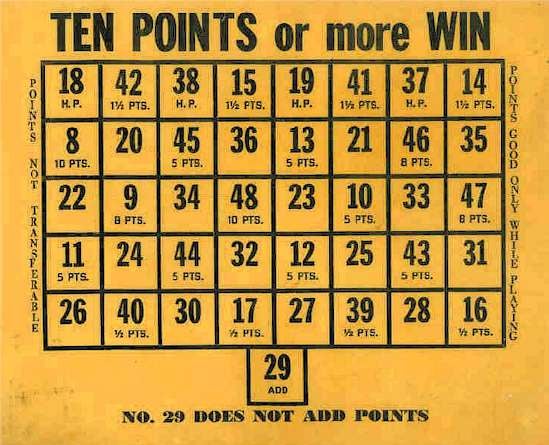
But people also don't understand probabilities technically. That's a fact well known to con artists, including the ones who run the old carnival game Razzle. At the link is the clearest explanation I've found of this. The game consists of a surface with many holes, each of which is numbered 1 through 6. You throw 8 marbles onto the surface and add up the numbers of the holes they land in. This is exactly equivalent to throwing 8 dice, BTW, and the game can be played that way.) There's a chart on the wall that shows how many points you get for each possible score. It looks like this:


As you can see, you get some amount of points for about half the numbers. The idea is that you pay, say $1 per roll, and if you get to ten points, you win a prize, which is usually quite valuable. If you roll an 8 or a 48, you win instantly! But you can win on two rolls with a 13 and a 10, and if the prize is worth a lot of money, you don't even mind spending a buck to get a point and a half or a half point. 


There are some other tricks the con man uses to pull more money out of you, on of which has to with the 29 score (read the linked article if you're interested) but he doesn't really need to use them.  The odds of rolling an 8 or a 46 are approximately 1 in 1.6 million. In fact, the chance of rolling any number that scores points is 1 in 36, and most of those just get you a half point. To get to 10 points you'd have to spend your life's savings. 


If you roll multiple dice, the numbers in the middle of the possible range are much more likely than the numbers on the extremes. If you roll two dice, there's only one way to score a 2 or a 12, but there are 6 ways to score a 7. With 8 dice, the probabilities at the extreme are infinitesimal. The probability of scoring an 8 is 1/6^8. Try it on your calculator.


In coming days, I'll have more to say about probability and statistics. Meanwhile, if you come across a Razzle game, walk away.

Thursday, April 28, 2022

The Foundation of Collective Insanity?

There have always been fairly widely shared delusions out there -- from the Protocols of the Elders of Zion, to the Illuminati, to the Reptiloids, and on and on endlessly. (The Illuminati was a real society of secularists in Bavaria but it was outlawed in 1790 with the encouragement of the Catholic Church. The delusional theory is that they continue to exist and secretly manipulate world events.) I wouldn't say that crazy beliefs have necessarily always been way out on the fringe. The Protocols of the Elders of Zion, for example, has at times been widely believed. But it does seem that the takeover of much of one of the two major parties in the U.S. by outright batshit insanity is something new, at least in recent times. 


Marin Cogan interviews NYT reporter Elizabeth Williamson, who traces the trajectory of craziness to the "false flag" claims about the Sandy Hook school massacre, thence to pizzagate to Covid-19 conspiracy theories to QAnon to the Big Lie about the 2020 election. One of Williamson's premises is that similar nutso responses to novel and shocking events have happened regularly in the past, but now they are amplified by social media. (Think of the moon landing.) There might have been similar claims about the Virginia Tech massacre in 2007, but if so we didn't hear about them because the channels to amplify them didn't exist. Alienation from authority and expertise by a growing segment of the population also contributes. As Williamson says:

There’s another reason why Sandy Hook was one of these watershed moments. It came at a moment when President Obama had just been reelected and there was a reaction to his election in general, this sense that he was an outsider and was going to propose some sort of draconian measures on people. His presidency was fertile ground for a lot of conspiracy theorists.

Or, to put it a bit more clearly, since Williamson doesn't seem willing to do it, Barack Obama had too much melanin and that felt threatening to Republican voters. Anyway, for people who feel that  history is passing them by, being "in the know" feels empowering.


It’s less about politics than psychology and a need for social connection and status. Many of the people that I interviewed for the book who are conspiratorially-minded started out being on the political left and then they moved to the far right. What I learned through the psychologists and the political scientists I interviewed for the book, about the motives behind the spread of these conspiracy rumors, is that it can be about fact-finding, it can be about a shared doubt in the official narrative. There’s an element of self-esteem involved — they are possessors of superior knowledge. It’s, as one family member described it to me and psychologists have confirmed, an element of narcissism: You’re the only person who knows. There’s a sort of smugness I noted — “I guess you only understand half the narrative at best” — that kind of thing.

The big problem here is that evidence and reason are of no use against these beliefs. They aren't about the standards that the reality based community uses to assess truth, they're a foundation of identity. I don't know what to do about it.


Wednesday, April 27, 2022

Wednesday Bible Study: False Prophets

Chapter 13 tells the story of an unnamed "man of God" who has two adventures. In the first, he comes out of Judah to denounce Jeroboam for his phony altar and his non-Levite priests. He prophecies the coming of a King Josiah who will trash the altar and kill all its priests. That would be a pretty good prophecy except that this was written some 300 years after the events  it purports to describe, probably during or after the reign of King Josiah. So no credit for the prophecy! Jeroboam tries to have the moG arrested but his hand withers. Jeroboam asks the moG to intercede for him with God,, which moG does, and Jeroboam gets his hand back. So Jeroboam invites the guy over for lunch but he says no, for unknown reasons God has commanded him not to eat or drink, and also not to go back to Judah by the way he came. Whatev.

The man of God's second adventure is puzzling, to say the least. .He meets another prophet, who lies to him and says an angel said he could forget about the not eating or drinking thing. Some prophet! So the moG goes back and has a meal, whereupon God has him killed by a lion. Why is God messing with the guy in this way? No clue. Then Jeroboam goes back to his blasphemous ways. End of story.

 As odd and off topic as the second story seems to be, the first one is a big reveal. We're starting to get a clue as to why this was written, and what it's really all about.Yes, in large part it's a compilation of older stories, but they've been selected, organized and edited with a purpose.

13 And behold, a man of God came out of Judah by the word of the Lord to Bethel. Jerobo′am was standing by the altar to burn incense. 2 And the man cried against the altar by the word of the Lord, and said, “O altar, altar, thus says the Lord: ‘Behold, a son shall be born to the house of David, Josi′ah by name; and he shall sacrifice upon you the priests of the high places who burn incense upon you, and men’s bones shall be burned upon you.’” 3 And he gave a sign the same day, saying, “This is the sign that the Lord has spoken: ‘Behold, the altar shall be torn down, and the ashes that are upon it shall be poured out.’” 4 And when the king heard the saying of the man of God, which he cried against the altar at Bethel, Jerobo′am stretched out his hand from the altar, saying, “Lay hold of him.” And his hand, which he stretched out against him, dried up, so that he could not draw it back to himself. 5 The altar also was torn down, and the ashes poured out from the altar, according to the sign which the man of God had given by the word of the Lord. 6 And the king said to the man of God, “Entreat now the favor of the Lord your God, and pray for me, that my hand may be restored to me.” And the man of God entreated the Lord; and the king’s hand was restored to him, and became as it was before. 7 And the king said to the man of God, “Come home with me, and refresh yourself, and I will give you a reward.” 8 And the man of God said to the king, “If you give me half your house, I will not go in with you. And I will not eat bread or drink water in this place; 9 for so was it commanded me by the word of the Lord, saying, ‘You shall neither eat bread, nor drink water, nor return by the way that you came.’” 10 So he went another way, and did not return by the way that he came to Bethel.

11 Now there dwelt an old prophet in Bethel. And his sons[a] came and told him all that the man of God had done that day in Bethel; the words also which he had spoken to the king, they told to their father. 12 And their father said to them, “Which way did he go?” And his sons showed him the way which the man of God who came from Judah had gone. 13 And he said to his sons, “Saddle the ass for me.” So they saddled the ass for him and he mounted it. 14 And he went after the man of God, and found him sitting under an oak; and he said to him, “Are you the man of God who came from Judah?” And he said, “I am.” 15 Then he said to him, “Come home with me and eat bread.” 16 And he said, “I may not return with you, or go in with you; neither will I eat bread nor drink water with you in this place; 17 for it was said to me by the word of the Lord, ‘You shall neither eat bread nor drink water there, nor return by the way that you came.’” 18 And he said to him, “I also am a prophet as you are, and an angel spoke to me by the word of the Lord, saying, ‘Bring him back with you into your house that he may eat bread and drink water.’” But he lied to him. 19 So he went back with him, and ate bread in his house, and drank water.

20 And as they sat at the table, the word of the Lord came to the prophet who had brought him back; 21 and he cried to the man of God who came from Judah, “Thus says the Lord, ‘Because you have disobeyed the word of the Lord, and have not kept the commandment which the Lord your God commanded you, 22 but have come back, and have eaten bread and drunk water in the place of which he said to you, “Eat no bread, and drink no water”; your body shall not come to the tomb of your fathers.’” 23 And after he had eaten bread and drunk, he saddled the ass for the prophet whom he had brought back. 24 And as he went away a lion met him on the road and killed him. And his body was thrown in the road, and the ass stood beside it; the lion also stood beside the body. 25 And behold, men passed by, and saw the body thrown in the road, and the lion standing by the body. And they came and told it in the city where the old prophet dwelt.

26 And when the prophet who had brought him back from the way heard of it, he said, “It is the man of God, who disobeyed the word of the Lord; therefore the Lord has given him to the lion, which has torn him and slain him, according to the word which the Lord spoke to him.” 27 And he said to his sons, “Saddle the ass for me.” And they saddled it. 28 And he went and found his body thrown in the road, and the ass and the lion standing beside the body. The lion had not eaten the body or torn the ass. 29 And the prophet took up the body of the man of God and laid it upon the ass, and brought it back to the city,[b] to mourn and to bury him. 30 And he laid the body in his own grave; and they mourned over him, saying, “Alas, my brother!” 31 And after he had buried him, he said to his sons, “When I die, bury me in the grave in which the man of God is buried; lay my bones beside his bones. 32 For the saying which he cried by the word of the Lord against the altar in Bethel, and against all the houses of the high places which are in the cities of Samar′ia, shall surely come to pass.”

33 After this thing Jerobo′am did not turn from his evil way, but made priests for the high places again from among all the people; any who would, he consecrated to be priests of the high places. 34 And this thing became sin to the house of Jerobo′am, so as to cut it off and to destroy it from the face of the earth.

Footnotes

  1. 1 Kings 13:11 Gk Syr Vg: Heb son
  2. 1 Kings 13:29 Gk: Heb he came to the city of the old prophet